education
2026 - present
PhD student in Computer Science at Université Laval
and Mila - Québec AI Institute,
advised by Cem Subakan
and Mirco Ravanelli.
My research focuses on interpretable and controllable machine learning: how neural networks organize information, how learned representations can be edited or steered, and how models can be made efficient and reliable in practice.
My research focuses on interpretable and controllable machine learning: how neural networks organize information, how learned representations can be edited or steered, and how models can be made efficient and reliable in practice.
I am also grateful to be supported by the FRQ-funded "Learning Interpretable Representations at Scale" grant and the IID PhD admission scholarship in artificial intelligence.
2023 - 2025
BSc in Computer, Communication and Electronic Engineering at the
University of Trento.
Advisor: Elisa Ricci.
My thesis explored interpretable audio classification, focusing on methods to generate listenable saliency maps for zero-shot audio classifiers.
My thesis explored interpretable audio classification, focusing on methods to generate listenable saliency maps for zero-shot audio classifiers.
experience

2025

Research Intern at Mitsubishi Electric Research Laboratories in Boston, advised by
Gordon Wichern and
Jonathan Le Roux.
I worked on efficient source separation and explainable anomaly detection.
I worked on efficient source separation and explainable anomaly detection.
2022 - 2025
Visiting Researcher at Mila - Québec AI Institute
I began my work on interpretable machine learning there, studying how audio and speech models represent information and how their predictions can be explained. This work led to the Listenable Maps line of research and shaped my broader interest in representation analysis, controllability, and reliable model behavior.
I also worked on multimodal audio processing and audio editing, and contributed to open-source research infrastructure through SpeechBrain and SpeechBrain-MOABB.
I began my work on interpretable machine learning there, studying how audio and speech models represent information and how their predictions can be explained. This work led to the Listenable Maps line of research and shaped my broader interest in representation analysis, controllability, and reliable model behavior.
I also worked on multimodal audio processing and audio editing, and contributed to open-source research infrastructure through SpeechBrain and SpeechBrain-MOABB.
2021 - 2023

Scientific collaborator with the LEGEND Experiment through INFN Roma Tre, working
with Giuseppe Salamanna.
Before fully moving into machine learning, I spent a brief chapter trying to become a physicist. As part of LEGEND, I developed firmware for the SiPM read-out controller card used in the liquid-argon veto system.
Before fully moving into machine learning, I spent a brief chapter trying to become a physicist. As part of LEGEND, I developed firmware for the SiPM read-out controller card used in the liquid-argon veto system.
2018 - 2025
Research Fellow at Fondazione Bruno Kessler in Trento.
I worked on resource-efficient machine learning for embedded and constrained devices, with a focus on neural network optimization, low-footprint inference, and deployment on microcontrollers. My projects spanned biosignal processing, imaging sensors, and tinyML.
This experience shaped my interest in machine learning systems that are not only accurate, but also efficient, measurable, and deployable under real-world constraints.
I worked on resource-efficient machine learning for embedded and constrained devices, with a focus on neural network optimization, low-footprint inference, and deployment on microcontrollers. My projects spanned biosignal processing, imaging sensors, and tinyML.
This experience shaped my interest in machine learning systems that are not only accurate, but also efficient, measurable, and deployable under real-world constraints.
bio
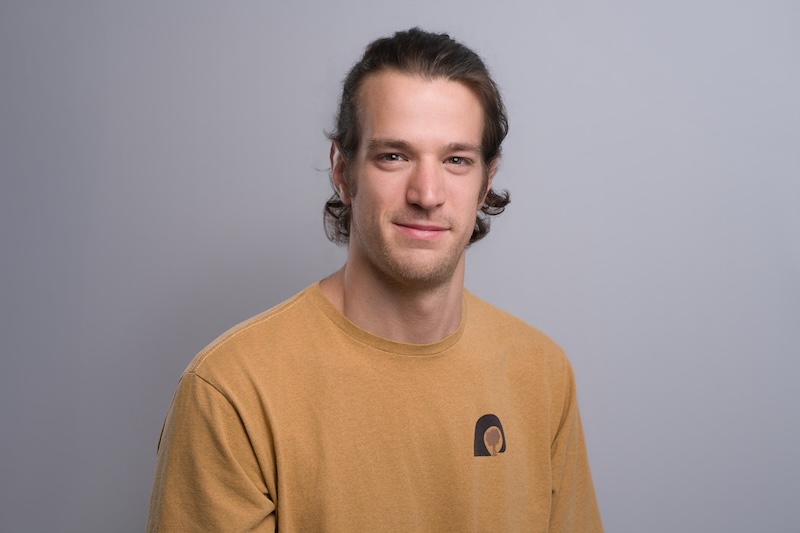
Francesco Paissan is a PhD student in Computer Science at Université Laval and Mila - Québec AI Institute. His research focuses on interpretable and controllable representation learning.
He currently works as a Student Researcher at Google. He was previously a Research Intern at Mitsubishi Electric Research Laboratories and a Visiting Researcher at Mila. His work has appeared at venues including ICML, NeurIPS, ICCV, etc.
Earlier, he was a Research Fellow at Fondazione Bruno Kessler, where he worked on resource-efficient machine learning for embedded and constrained devices, and a scientific collaborator with the LEGEND Experiment.
representative papers
multimedia